Kandy Temple - Dalada Maligawa, The Temple of Sacred Tooth Relic
Kandy Temple - Dalada Maligawa, The Temple of Sacred Tooth Relic
The Sri Dalada Maligawa, or the Temple of the Sacred Tooth Relic, is the spiritual heart of Sri Lanka and one of the most venerated shrines in the Buddhist world. Located in the picturesque hill capital of Kandy, this golden-roofed temple houses the left canine tooth of the Lord Buddha—a relic that has not only defined the island’s religious identity but also its political history for over two millennia. As of 2026, it remains a vibrant center of living heritage and a UNESCO World Heritage site.
Historical and Political Significance
The history of the relic is inextricably linked to the sovereignty of Sri Lanka. According to ancient chronicles, the Tooth Relic was brought to the island in the 4th century AD by Princess Hemamali and Prince Dantha, hidden within the princess’s hair to protect it from conflict in India. Historically, whoever possessed the Tooth Relic held the divine right to rule the kingdom.
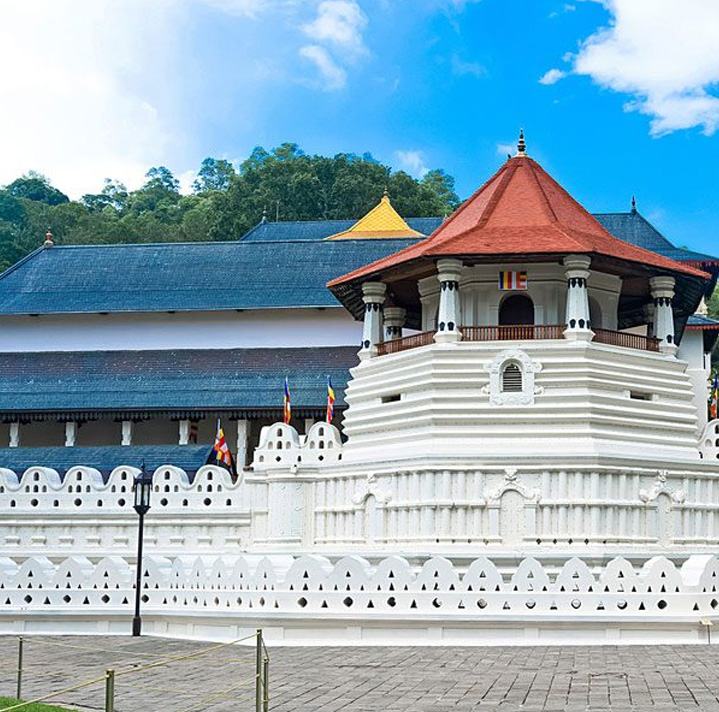
Originally kept in Anuradhapura and Polonnaruwa, the relic moved with the royal capital until it reached its final destination in Kandy. The current temple complex was primarily built by the last kings of the Kandyan Kingdom, including King Vimaladharmasuriya I and King Sri Vikrama Rajasinha, the latter of whom added the iconic octagonal pavilion known as the Pattirippuwa.
Architectural Splendor and Design
The temple is a masterpiece of Kandyan architecture, characterized by intricate wood carvings, painted ceilings, and moonstones.
- The Moat and Golden Canopy: The temple is surrounded by a peaceful moat and the white "cloud-drift" wall (Valakulu Bamma). The most striking feature is the modern golden canopy erected over the central shrine, protecting the sanctuary where the relic resides.
- The Paththirippuwa (The Octagon): Originally used by the king to address his people, this iconic structure now houses an extensive collection of ancient palm-leaf (Ola) manuscripts.
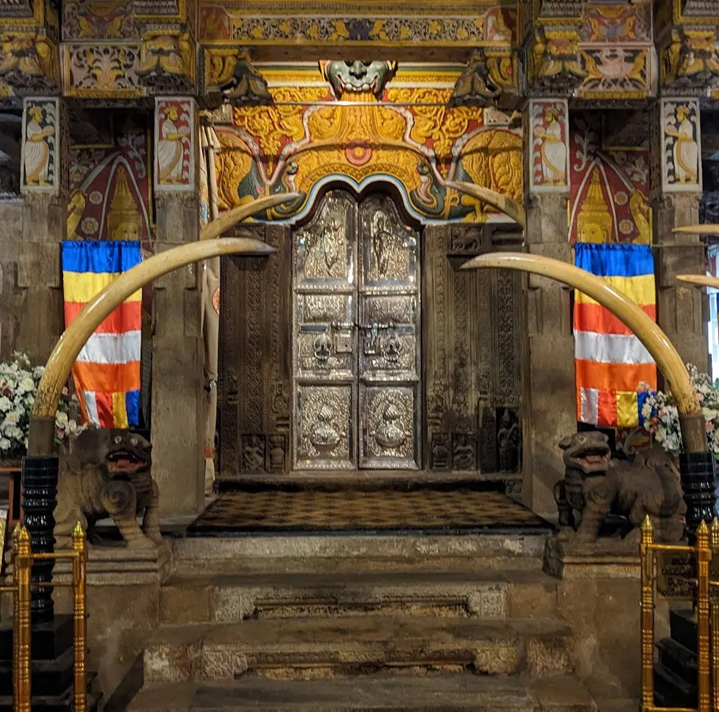
- • The Inner Sanctum: The relic itself is kept in the Handun Kunama (Sandalwood Shed). It is encased within seven nested gold caskets, each encrusted with rubies, emeralds, and diamonds. While the physical tooth is rarely displayed to the public, the outer casket is visible during daily prayer services.
The Rituals: The Thevava and Esala Peraher
The temple is not merely a museum but a living institution. Every day, three times a day (at dawn, noon, and evening), the Thevava (ritual service) is performed by monks of the Malwatte and Asgiriya chapters. These ceremonies are accompanied by traditional Kandyan drumming and the scent of incense and jasmine flowers, creating an atmosphere of deep spiritual devotion.
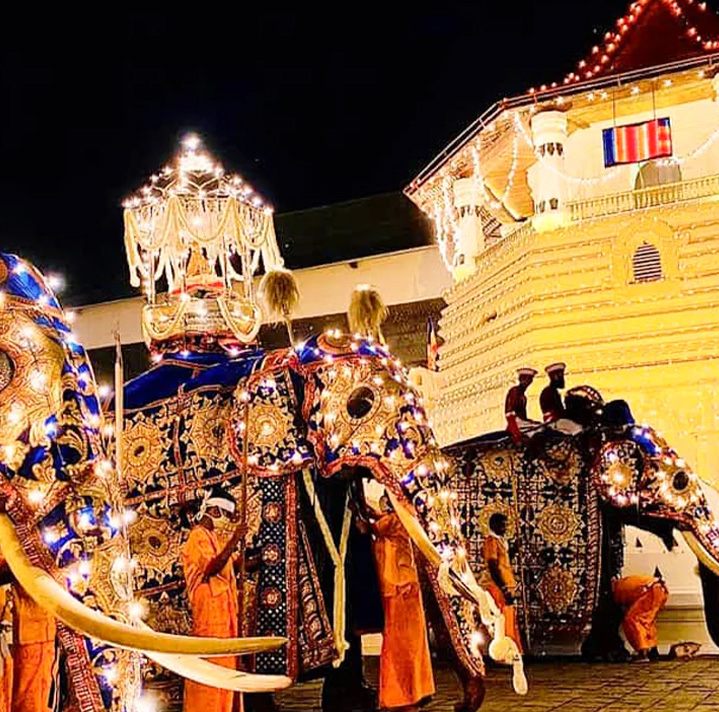
The most spectacular event associated with the temple is the Kandy Esala Perahera, held annually in July or August. In 2026, this ten-day festival will continue to draw hundreds of thousands of pilgrims. It features a grand procession of over a hundred elegantly decorated elephants, traditional fire dancers, whip-crackers, and Kandyan dancers, all escorting a replica of the relic casket through the streets of Kandy.
Surrounding Complex and Museums
The Maligawa is part of a larger royal palace complex that includes:
- The Royal Palace: The former residence of the Kandyan monarchs.
- The Audience Hall (Magul Maduwa): A stunning open-air pavilion featuring intricately carved wooden pillars where the king held court and state ceremonies.
- The World Buddhist Museum: Located in the former High Court building, this museum provides a comprehensive look at the spread of Buddhism across Asia.
- The International Buddhist Museum: This gallery showcases the diverse traditions of Buddhism globally, featuring artifacts and dioramas from various Buddhist nations.
Essential Visitor Information for 2026
- Dress Code: To enter the sacred grounds, visitors must wear white or light-colored clothing that covers the shoulders and knees.
- Footwear: Shoes must be deposited at the designated shoe counters before entering the temple gates.
- Tickets and Tours: International visitors can purchase tickets at the entrance or via the official Temple of the Tooth website. It is highly recommended to visit during the evening Thevava (around 6:30 PM) to experience the traditional drumming.
- Photography: Photography is permitted in most outdoor areas and museums, but taking photos inside the inner sanctum where the relic is housed is strictly prohibited.
The Temple of the Sacred Tooth Relic is more than a monument; it is the soul of Sri Lanka. Whether you are a pilgrim seeking a blessing or a traveler admiring its architectural brilliance, the temple offers a profound sense of peace and a direct link to the island's royal and spiritual past.
Gallery
Previous Rafting Tour experiences with our guests