Jaya Sri Maha Bodhi Tree in Anuradhapura
Jaya Sri Maha Bodhi Tree in Anuradhapura
The Jaya Sri Maha Bodhi, located in the Mahamewna Gardens of Anuradhapura, Sri Lanka, is a sacred fig tree (Ficus religiosa) that stands as the world's oldest human-planted tree with a documented history. Planted in 288 BC, it has been venerated for over 2,300 years as one of the most sacred relics in Buddhism.
Historical Origins and Arrival
The history of the Jaya Sri Maha Bodhi is deeply intertwined with the introduction of Buddhism to Sri Lanka. According to the ancient chronicle Mahavamsa, the tree grew from a sapling of the southern branch of the original Bodhi tree in Bodh Gaya, India, under which Siddhartha Gautama attained enlightenment.
In the 3rd century BC, following the conversion of King Devanampiya Tissa to Buddhism by Arahat Mahinda, the king requested a sacred object for worship. In response, the Indian Emperor Ashoka sent his daughter, the nun Sanghamitta Theri, to the island with the sacred sapling. It was ceremoniously received at the port of Jambukola and brought to Anuradhapura, where it was planted in the Royal Gardens.
Buddhist Pilgrimage and Spiritual Value
For Buddhists worldwide, the Jaya Sri Maha Bodhi is more than a historical monument; it is a "living Buddha". It is believed to be the only living relic that physically touched the Buddha during his enlightenment.
- Vows and Rituals: Devotees frequently visit to make vows (Panduru) for healing, successful childbirth, and personal prosperity.
- Agricultural Traditions: Farmers from the North Central Province traditionally offer their first harvest (Aluth Sahal Mangalyaya) to the tree, believing it ensures rain and protects crops from pests and wildlife.
- Annual Festivals: Major ceremonies occur throughout the year, including:
- Duruthu Mangalle (January): The new rice festival.
- Parana Avurudu Mangalle: Held one week before the Sinhalese New Year.
- Nanumura Mangalle: The ritual bathing and anointing of the Buddha image at the site.
- Kartika Festival (October/November): A festival of lights where thousands of oil lamps are lit.
Architectural Features and Preservation
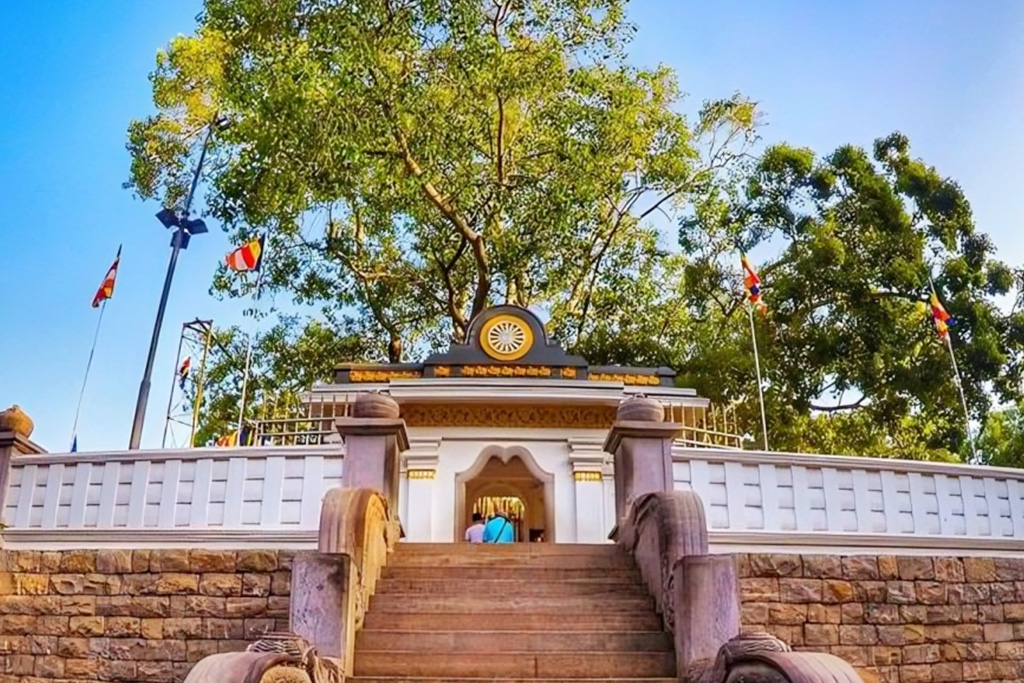
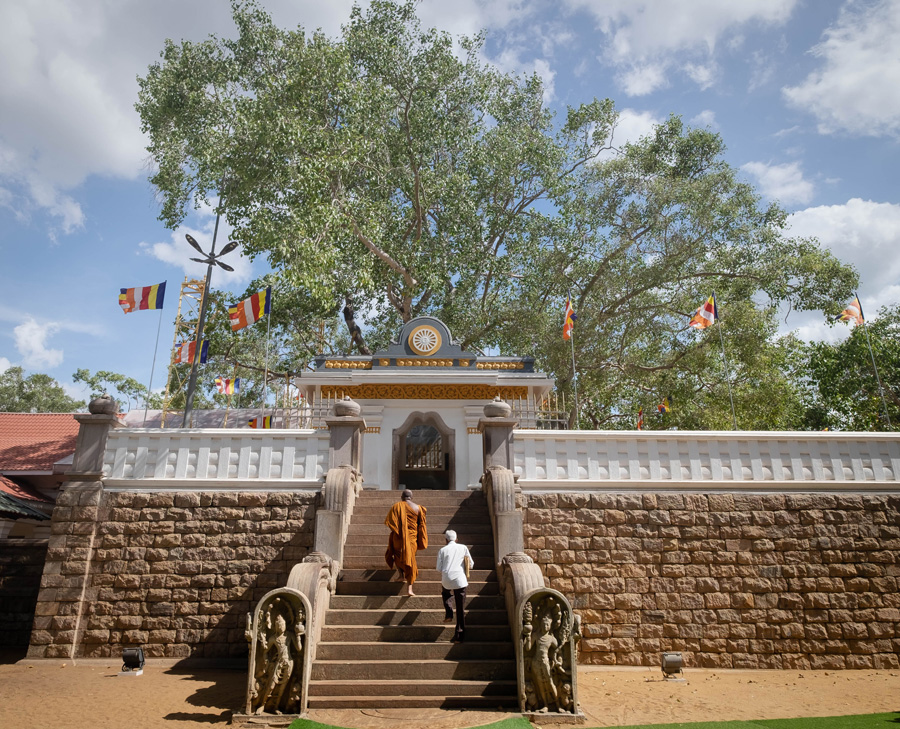
The sacred tree is situated on a high terrace approximately 6.5 meters above the ground, known as the Maluwa. It is surrounded by four lower-level terraces where "Parivara Bodhi" (companion trees) are planted to protect the central tree from wind and animals.
Over centuries, various monarchs added protective and decorative elements:
- Walls: King Gothabhaya (249–262 AD) built a rubble wall, and King Kirti Sri Rajasinha (1747–1782) constructed the current 10-foot-high wall to protect it from wild elephants.
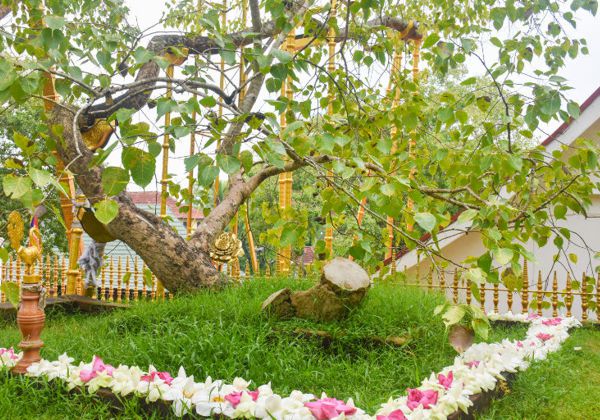
- Fences: A golden fence was added in 1969 to safeguard the tree while allowing pilgrims to view it.
- Structural Supports: Due to its extreme age, the ancient branches are supported by gold-plated iron crutches.
Resilience Through Conflict and Nature
The tree’s survival for over two millennia is a testament to the dedication of its guardians. Even after Anuradhapura was abandoned as a capital in the 11th century, local monks and villagers continued to protect it from the encroaching jungle and wildlife.
It has survived numerous threats:
- Natural Disasters: Severe storms in 1907 and 1911 broke several branches.
- Vandalism: In 1929, an individual attempted to cut down the tree, succeeding in severing one branch.
- 1985 Massacre: During the Sri Lankan Civil War, the LTTE attacked the site, killing 146 pilgrims on the upper terrace. While many lives were lost, the sacred tree itself remained unharmed.
Today, the site is administered by the Chief High Priest of the Atamasthana and remains a central pillar of Sri Lankan identity and a major destination for international visitors, including Prime Minister Narendra Modi in 2025. Access to the uppermost terrace is strictly restricted to preserve the tree's fragile health.
Gallery
Previous Rafting Tour experiences with our guests