Minneriya National Park
Minneriya National Park
Minneriya National Park, located in the North Central Province of Sri Lanka, is a crowning jewel of the island’s "Cultural Triangle." Spanning roughly 8,889 hectares, it was designated a national park in 1938 to protect the catchment area of the historic Minneriya Tank and the surrounding wildlife. This park is not merely a forest; it is a seasonal stage for one of the most spectacular wildlife events on the planet, widely known as "The Gathering."
The Heart of the Park: The Minneriya Tank
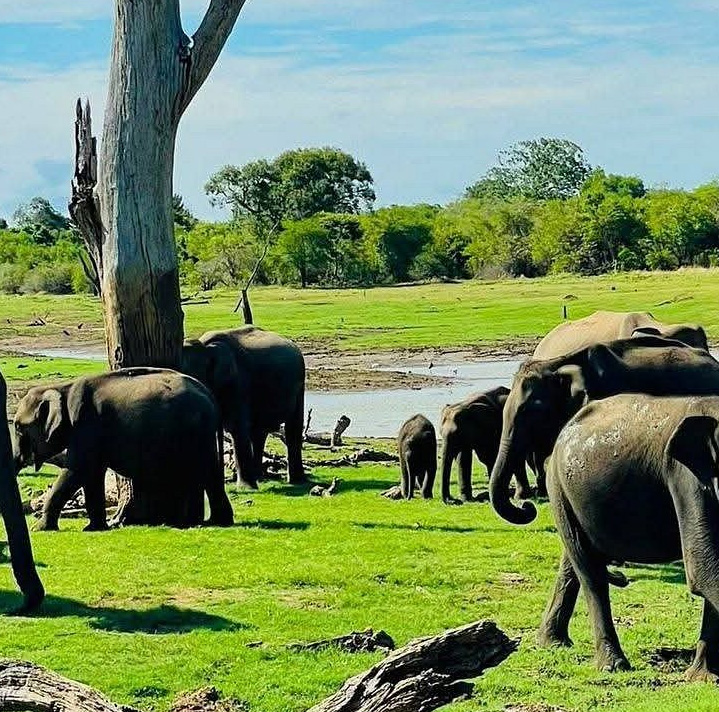
The lifeblood of the park is the ancient Minneriya Tank, a massive reservoir built by King Mahasen in the 3rd century AD. This incredible feat of ancient engineering covers approximately 4,670 acres when full. During the dry season, as the water recedes, it reveals fertile, lush green grasslands. This cyclical transformation creates a unique microclimate that sustains thousands of animals when the surrounding scrub jungles of the dry zone turn parched and brown. The sight of the vast blue reservoir framed by the Matale Hills and the scrub forest creates a landscape of serene, rugged beauty.
"The Gathering": A Global Phenomenon
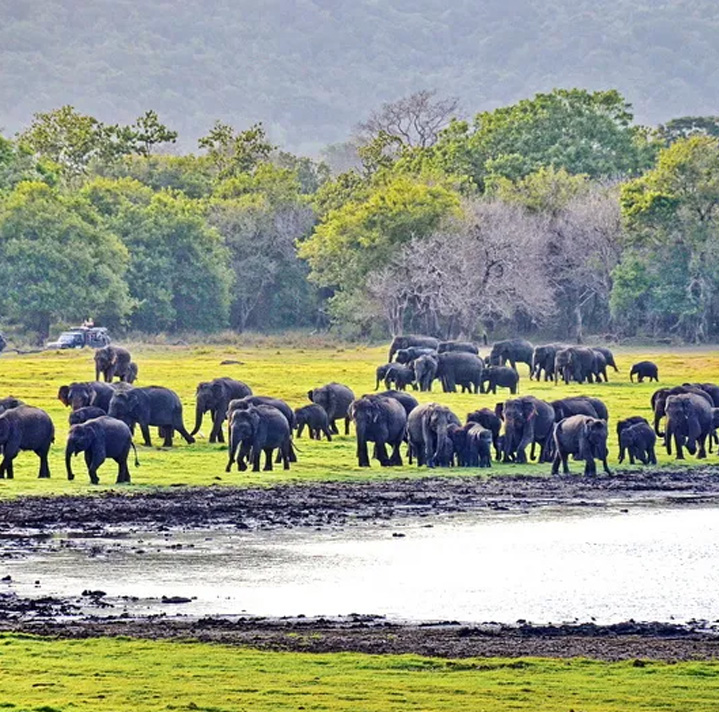
Minneriya is most famous for The Gathering of Elephants, ranked by Lonely Planet and the BBC as one of the greatest wildlife spectacles in the world. Between July and October each year, up to 300 to 400 elephants migrate from the neighboring Wasgamuwa, Kaudulla, and Eco-Park regions to the banks of the Minneriya Tank.
Unlike the fragmented herds seen in other parks, here they form a massive, socialized congregation. This is not a migration in the traditional sense, but a seasonal congregation for survival. Visitors can witness young calves frolicking in the mud, matriarchs protecting their kin, and massive bulls competing for dominance—all set against the backdrop of the setting sun. It is arguably the best place in Asia to observe elephant social behavior in such high concentrations.
Biodiversity and Landscape
While elephants are the headline act, the park’s biodiversity is remarkably rich. The vegetation is a mix of dry mixed evergreen forests, abandoned chena lands, and scrubland.
- Mammals: Beyond the giants, lucky visitors may spot the elusive Sri Lankan Leopard or the Sloth Bear, though they are rarer here than in Yala. More common sights include the Spotted Deer, Sambar Deer, Wild Boar, and three species of monkeys: the Toque Macaque, Purple-faced Langur, and Grey Langur.
- Avifauna: Minneriya is an Important Bird Area (IBA), making it a paradise for birdwatchers. The reservoir attracts large flocks of water birds, including Lesser Adjutants, Painted Storks, and Spot-billed Pelicans. Raptors such as the Grey-headed Fish Eagle and Crested Serpent Eagle are frequently seen scanning the plains for prey.
- Reptiles and Amphibians: The park is home to the Mugger Crocodile, often seen sunning itself on the banks, and various species of monitor lizards and pythons.
The Safari Experience
A safari in Minneriya is a rugged adventure. Most tours use 4x4 Jeeps that navigate the dusty tracks and muddy banks of the reservoir.
- Best Time to Visit: To witness the peak of the "Gathering," visit between August and September. However, the park is a rewarding destination year-round for birding and general wildlife.
- Optimal Hours: The afternoon safari (starting around 3:00 PM) is the most popular, as elephants emerge from the shade of the forest into the open grasslands to drink and graze as the temperature drops.
- Accessibility: The park is easily accessible from the nearby heritage cities of Habarana, Sigiriya, and Polonnaruwa, making it a perfect half-day excursion for those exploring Sri Lanka’s historical sites.
Conservation and Ethics
Minneriya faces challenges from increasing tourism and the human-elephant conflict in surrounding villages. Ethical tourism is vital here; travelers are encouraged to use reputable operators who maintain a respectful distance from the animals and stick to designated tracks. By supporting the park, visitors contribute to the protection of a vital wildlife corridor that allows these ancient giants to roam freely across the island’s northern plains.
Gallery
Previous Rafting Tour experiences with our guests