Peradeniya Botanical Garden
Peradeniya Botanical Garden
The Royal Botanic Gardens, Peradeniya, situated approximately 5.5 kilometers west of Kandy in the Central Province, stands as Sri Lanka’s largest and most prestigious botanical sanctuary. Covering 147 acres (59 hectares) at an elevation of 460 meters, the gardens are cradled within a horseshoe-shaped bend of the Mahaweli River, providing a lush, fertile environment that receives nearly 200 days of rainfall annually. As of 2026, it remains an essential global destination for both scientific research and tourism, attracting approximately 2 million visitors each year.
Historical Evolution
The site's history predates colonial rule, originally serving as the royal court of King Wickramabahu III in 1371. It was later used as a pleasure garden by Kandyan royalty, including King Kirti Sri Rajasinghe, before the British occupied the kingdom in 1815.
The formal botanical gardens were established in 1821 by Alexander Moon, initially focusing on the cultivation of coffee and cinnamon. It was officially founded as a botanical institution in 1843, receiving plant imports from Kew Gardens in London. During World War II, the gardens served as the headquarters for the South East Asia Command under Lord Louis Mountbatten.
Key Botanical Highlights
The gardens house over 4,000 plant species, including a legendary collection of tropical timber trees, medicinal herbs, and rare exotics.
- Orchid House: One of the most famous features, it displays over 300 varieties of exquisite orchids, including Cattleya, Dendrobium, and Phalaenopsis.
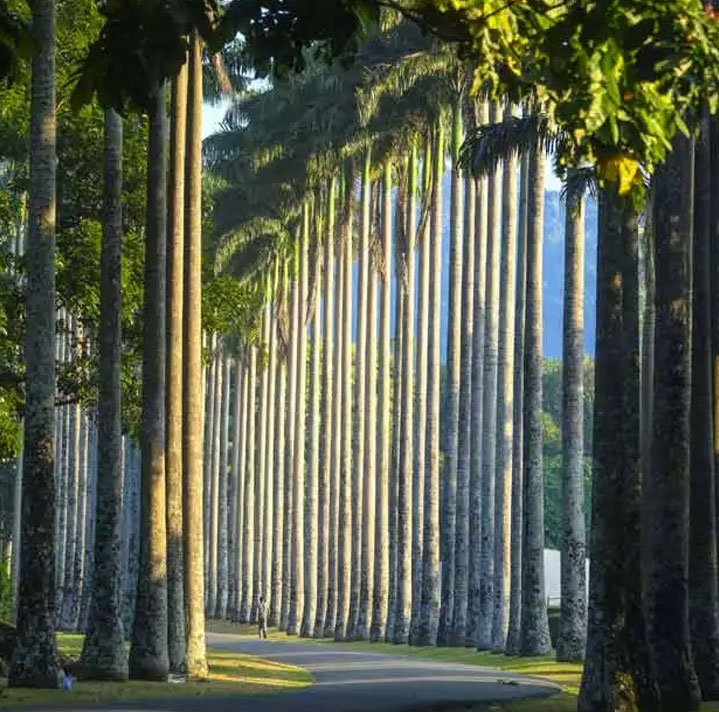
- The Avenue of Palms: Stately pathways lined with various species, most notably the Royal Palms, Palmyra, and Cabbage Palms, creating dramatic vistas throughout the park.
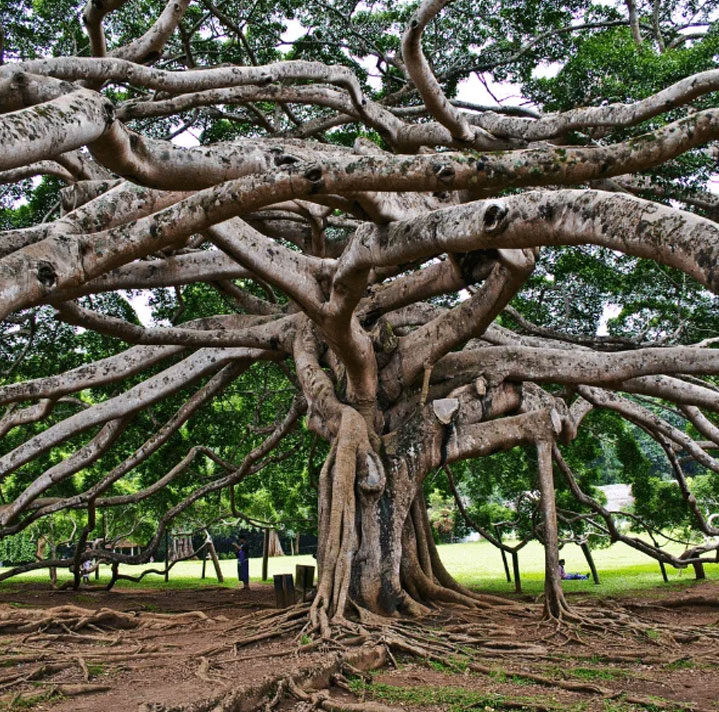
- Giant Javan Fig Tree: Located on the Great Lawn, this massive tree (Ficus benjamina) covers approximately 1,600 to 2,500 square meters with its sprawling, umbrella-like canopy.
- Cannonball Tree: Planted in 1901 by King George V and Queen Mary, this tree is known for its large, waxy flowers and heavy, woody fruit resembling cannonballs.
- Burma Bamboo: A towering collection of giant bamboo capable of reaching 40 meters in height and growing up to 30 centimeters per day.
- Coco de Mer: One of the rarest plants globally, this palm produces the largest and heaviest seed in the plant kingdom, weighing up to 20kg.
Research and Conservation
Beyond its aesthetic appeal, the facility is a vital scientific hub managed by the Department of National Botanic Gardens. It is home to the National Herbarium of Sri Lanka, which preserves more than 200,000 dried plant specimens for botanical authentication and study. The gardens have historically played a role in introducing economic crops to Sri Lanka, including tea, rubber, and cinchona.
Visitor Experience and 2026 Information
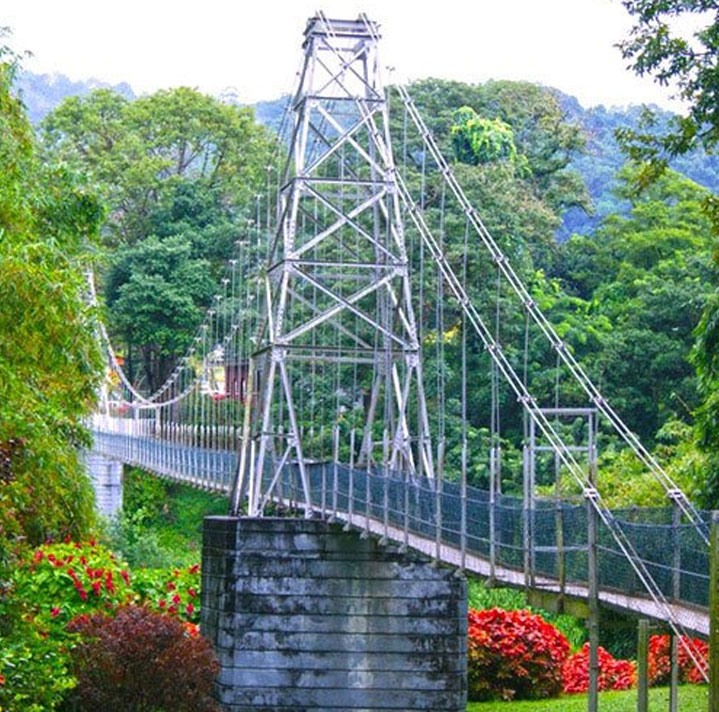
For those visiting in 2026, the gardens offer a tranquil escape with well-maintained paths, a spice garden (featuring nutmeg, cloves, and cinnamon), and a suspension bridge over the Mahaweli River.
- Operating Hours: Daily from 7:30 AM to 5:00 PM (some areas remain open until 6:00 PM).
-
Entry Fees (2026 Estimate):
- Foreign Adults: ~3,000 LKR ($10–15 USD).
- Foreign Students: ~2,000 LKR.
- Local Residents: Significant discounts apply (approx. 100 LKR for adults).
- Transportation: Located 15 minutes from Kandy city center. Visitors can take Bus No. 1 or a 10-minute walk from the Sarasavi-Uyana railway station.
- Amenities: Electric sightseeing carts are available for roughly 500–1000 LKR per person. There is a cafeteria on-site, though many visitors prefer to bring a picnic to enjoy on the Great Lawn.
The gardens are best experienced in the early morning or late afternoon to avoid the midday heat and to observe the thousands of fruit bats and monkeys that inhabit the tall canopies.
Gallery
Previous Rafting Tour experiences with our guests