Pinnawala Elephant Orphanage Sri Lanka
Pinnawala Elephant Orphanage Sri Lanka
Located in the village of Pinnawala in the Sabaragamuwa Province, the Pinnawala Elephant Orphanage (PEO) is a world-renowned sanctuary, nursery, and captive breeding ground for Asian elephants. Founded in 1975 by the Sri Lanka Department of Wildlife Conservation, it was established to provide a lifeline for orphaned and injured elephants found wandering in the wild. Today, it maintains the largest herd of captive elephants in the world, housing approximately 70 to 100 individuals across multiple generations.
Historical Background and Mission
Before British colonial rule, Sri Lanka's elephant population was estimated at over 30,000. By the 1960s, hunting and human-elephant conflict had decimated these numbers nearly to extinction. The orphanage began with just five abandoned calves—Vijaya, Neela, Kadira, Mathlee, and Kumari—and was initially located at Wilpattu National Park before moving to its current 25-acre coconut plantation site along the Maha Oya River. Its mission has evolved from simple rescue to a complex operation involving specialized veterinary care, a scientific breeding program launched in 1982, and a significant role in national conservation education.
The Daily Visitor Experiencen
As of 2026, the facility remains a major tourist attraction, with revenue from tickets supporting the massive costs of feeding and medical care. Visitors can observe a strictly timed daily routine:
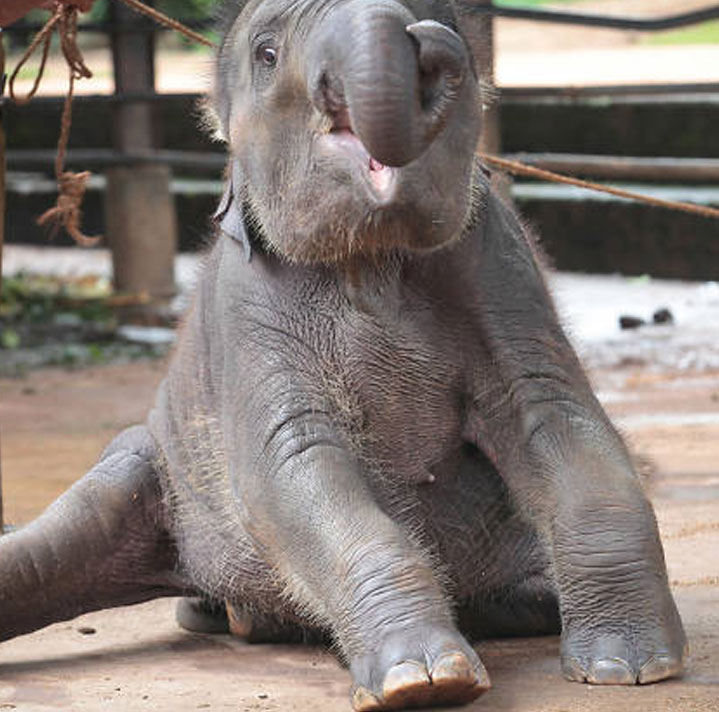
- Bottle Feeding: Occurs at 09:15, 13:15, and 17:00. While natural-born calves at the orphanage are not bottle-fed, orphaned arrivals are hand-raised by mahouts (handlers).
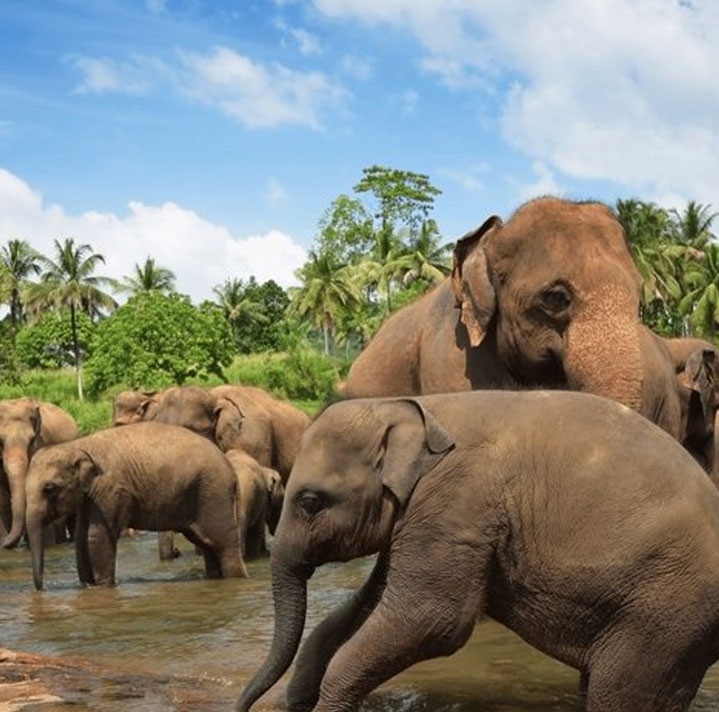
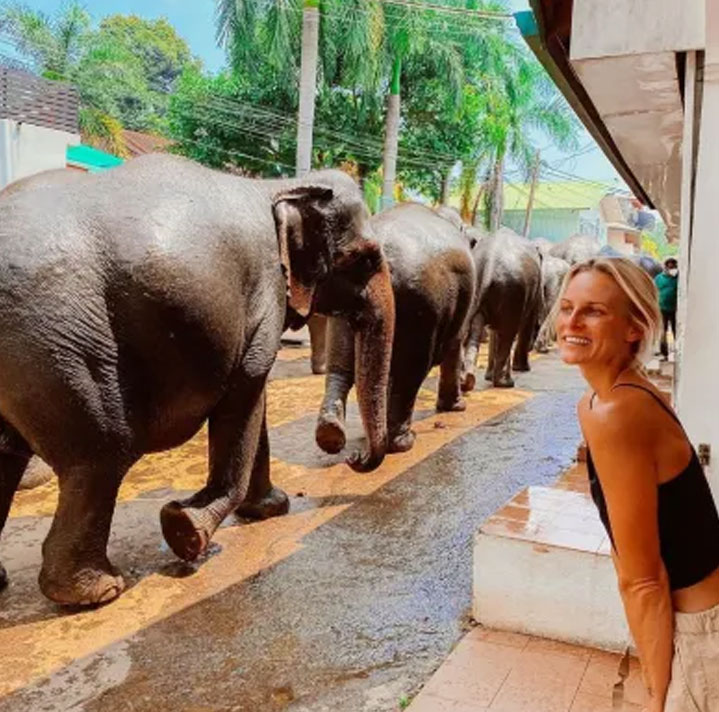
- The River Bath: The herd is led across the main road to the Maha Oya River twice daily, from 10:00 to 12:00 and 14:00 to 16:00. This is widely considered the highlight of any visit, as the elephants socialize and play in the water.
- Facility Features: The site includes a museum, a laboratory for elephant behavior research, and restaurants that offer views of the river bathing.
Conservation and Breeding Success
Pinnawala has seen remarkable success in its breeding efforts, with over 75 captive births recorded by 2023. A significant milestone occurred in August 2021 when a 25-year-old elephant named Surangi gave birth to twin male calves, the first such birth in Sri Lanka in 80 years. Despite these successes, elephants raised here are generally not released into the wild because they have become dependent on human-supplied food and lack the social skills necessary to survive in wild herds.
Facilities and Infrastructure
The orphanage continuously updates its facilities to improve animal welfare. By 2026, a new 45.3 million LKR facility is being utilized to house male elephants during their musth periods—a time of heightened aggression due to reproductive hormones. This allows for individual management of males while the females and young calves continue to roam more freely as a social herd during the day. The elephants consume roughly 150–250 kg of green matter daily, including jackfruit, coconut, and kitul leaves, much of which is brought in from external sources to meet the herd's massive dietary requirements.
Ethical Considerations
While Pinnawala is a sanctuary, it faces ongoing scrutiny regarding the use of chains and the level of human-elephant interaction. Management argues that chains are necessary for safety, particularly for dominant males or during the musth period, and are safer than ropes which can cut into the skin. Visitors in 2026 are encouraged to practice responsible tourism by avoiding close physical contact (like riding) and focusing on observational experiences.
Visitor Information (2026)
- Operating Hours: Daily from 08:30 to 18:00 (Ticket counter closes at 17:30).
- Location: 13 km northeast of Kegalle; the nearest railway station is Rambukkana (2 km away).
- Entry Fees: Approximately 295 LKR for locals and significantly higher for foreign tourists (around $17–$20 USD or £10 equivalent).
Gallery
Previous Rafting Tour experiences with our guests