Stilt Fishermen
Stilt Fishermen
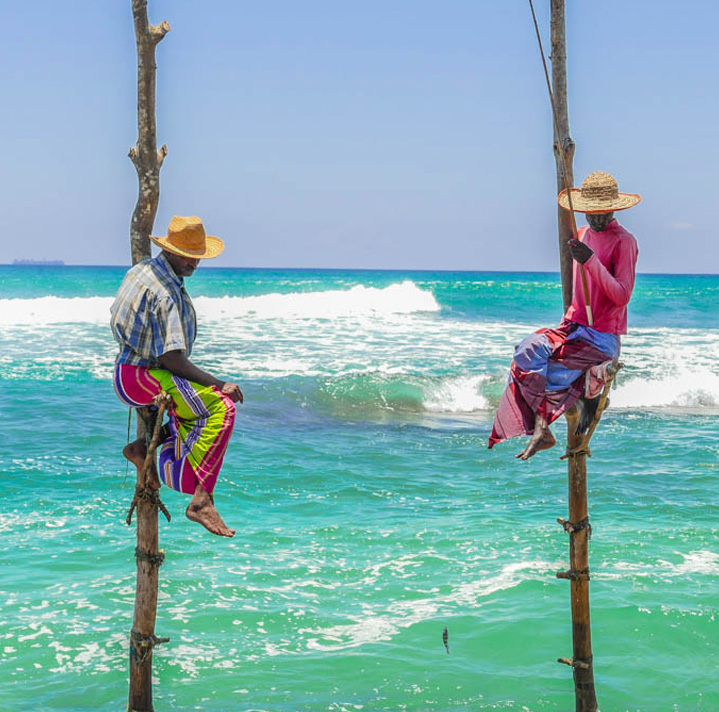
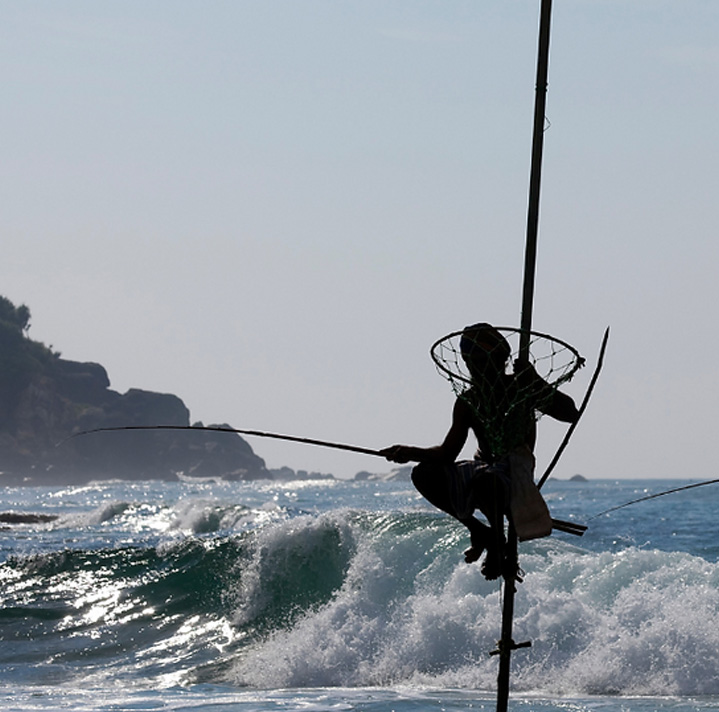
The image of a lone fisherman perched atop a slender wooden pole, silhouetted against a fiery Indian Ocean sunset, is perhaps the most iconic visual representation of Sri Lanka. Known locally as Ritipanna, stilt fishing is a unique, centuries-old traditional fishing method that is exclusive to the island’s southern coastline. While it appears effortless and poetic to the casual observer, it is a practice born of necessity, defined by incredible physical endurance and a deep understanding of the sea.
The Origins: A Post-War Innovation
Unlike many ancient traditions that date back millennia, stilt fishing is a relatively modern invention. It is believed to have originated during World War II. Following the war, when food was scarce and commercial fishing gear was unavailable, local men began fishing from shipwrecks and rock outcrops left behind in the shallow waters. As these spots became overcrowded, clever fishermen began driving iron stakes into the coral reef. Eventually, these evolved into the wooden stilts used today. The practice flourished in coastal towns such as Ahangama, Koggala, Weligama, and Kathaluwa, passed down from father to son as a protected family craft.
The Anatomy of the Stilt
The setup for stilt fishing is deceptively simple but requires specific materials to withstand the corrosive salt air and the constant battering of the waves.
The Petta is the vertical pole, usually about 3 to 4 meters long, made from sturdy Alstonia or mangrove wood. It is driven deep into the sand or wedged into crevices within the coral reef. The Crossbar is the horizontal branch is tied to the vertical pole using strong coconut fiber (coir) rope. This serves as the seat where the fisherman balances. The fisherman sits several feet above the water, holding the pole with one hand and his fishing rod with the other. This elevation is crucial; it ensures that the fisherman’s shadow does not fall on the water, which would spook the fish.
The Art of the Catch
Stilt fishing is a test of extreme patience and balance. The fishermen typically head out during two shifts: dawn and dusk. They wade out into the surf, climb their poles, and wait. They do not use modern reels or expensive lures. Instead, they use a simple rod made of bamboo or kitul wood, with a line and a small hook. Interestingly, they often fish without bait. By rapidly twitching the rod, they create a disturbance on the water's surface that mimics the movement of small prey, attracting "Spotted Herrings" (Amblygaster sirm) and small mackerel (Bolla). The fisherman stores his catch in a cloth bag tied around his waist or to the pole itself. Because they are fishing in shallow water, the yield is rarely large, but it is enough to sustain a family or provide a modest income at the local market.
Cultural Significance and Resilience
For generations, stilt fishing was the primary livelihood for hundreds of families along the southern coast. However, the tradition faced a near-catastrophic blow during the 2004 Indian Ocean Tsunami. The waves devastated the coastline, destroying the reefs and the poles, and many fishing families lost their equipment and their homes. In the years following the disaster, the geography of the shoreline changed, making fish scarcer in the traditional "stilt zones." Despite this, the community rallied to revive the practice, recognizing it not just as a source of food, but as a vital part of their cultural identity.
The Modern Dilemma: Tradition vs. Tourism
Today, stilt fishing exists at a complex crossroads. As commercial fishing and modern technology have made traditional methods less profitable, many fishermen have transitioned into the tourism industry. When you visit the beaches of Koggala or Ahangama today, you will see rows of stilts. While some men still fish for sustenance, many "perform" the art for travelers. Visitors are often asked for a small tip in exchange for photographs or the opportunity to climb the stilt themselves.
While some critics argue that this "commercializes" the tradition, local families view it as a necessary evolution. The income from tourism allows the tradition to survive; without it, the younger generation would likely abandon the craft entirely for more stable jobs in the cities. By supporting these fishermen, travelers are indirectly helping to preserve a visual and cultural heritage that would otherwise vanish.
Witnessing the Tradition Responsibly
If you wish to see stilt fishermen in their most authentic element, the best time to visit is during the southwest monsoon season (May to September), when the sea is rougher and the fish come closer to the shore.
Timing: Arrive very early in the morning (around 6:00 AM) or just before sunset. Location: The stretch of road between Unawatuna and Weligama offers the best vantage points. Interaction: If you take photos, it is customary to offer a small gratuity (usually 500–1000 LKR). This supports the local community and acknowledges the physical toll the practice takes on their bodies—sitting on a wooden bar for hours under the tropical sun is no easy feat.
Gallery
Previous Rafting Tour experiences with our guests