Thuparama Stupa in Anuradhapura Sri Lanka
Thuparama Stupa in Anuradhapura Sri Lanka
Thuparamaya, situated within the sacred Mahamewna Uyana in Anuradhapura, holds the distinction of being the first Buddhist stupa built in Sri Lanka. Constructed during the 3rd century BC by King Devanampiya Tissa, it stands as a cornerstone of the island’s religious and architectural history.
Historical Origins
The origins of Thuparamaya are inextricably linked to the arrival of Arahat Mahinda, who introduced Theravada Buddhism to the island. Legend states that at the request of the monk, King Devanampiya Tissa appealed to Emperor Ashoka of India for a sacred relic. The Emperor responded by sending the right collarbone of the Buddha.
Chronicles like the Mahavamsa detail the miraculous events surrounding its construction. It is said the relic was carried to the site by a royal elephant that refused to let the casket be lowered until a mound of the same height as its back was built. Upon being enshrined, the relic reportedly rose into the sky and performed a "twin miracle" of emitting fire and water before settling into the relic chamber.
Architectural Evolution
Architecturally, Thuparamaya has undergone significant transformations over the millennia:
- Original Form: Initially, the stupa was built in the Dhanyakara (paddy-heap) shape.
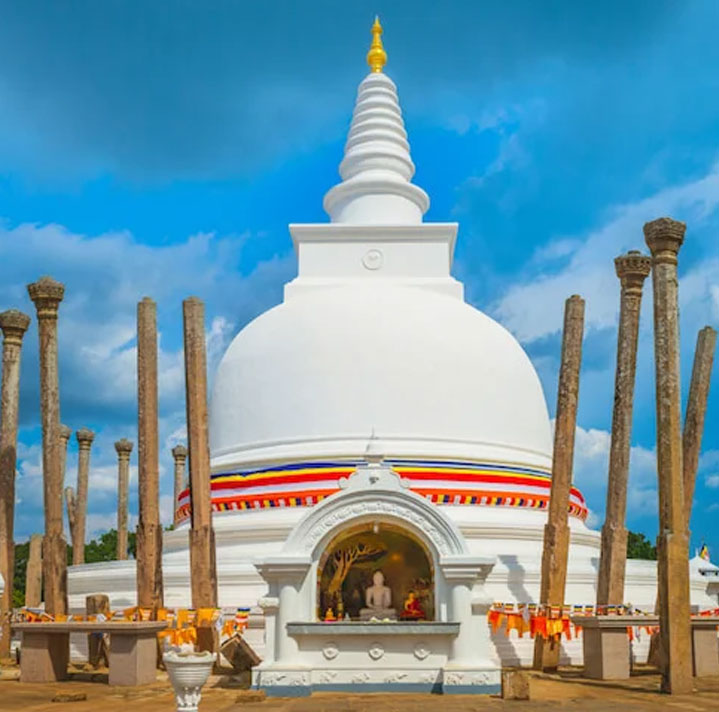
- Current Bell Shape: Following various destructions and subsequent restorations—the last significant one occurring in 1842—the structure now exhibits a Ghantakara (bell-shaped) design.
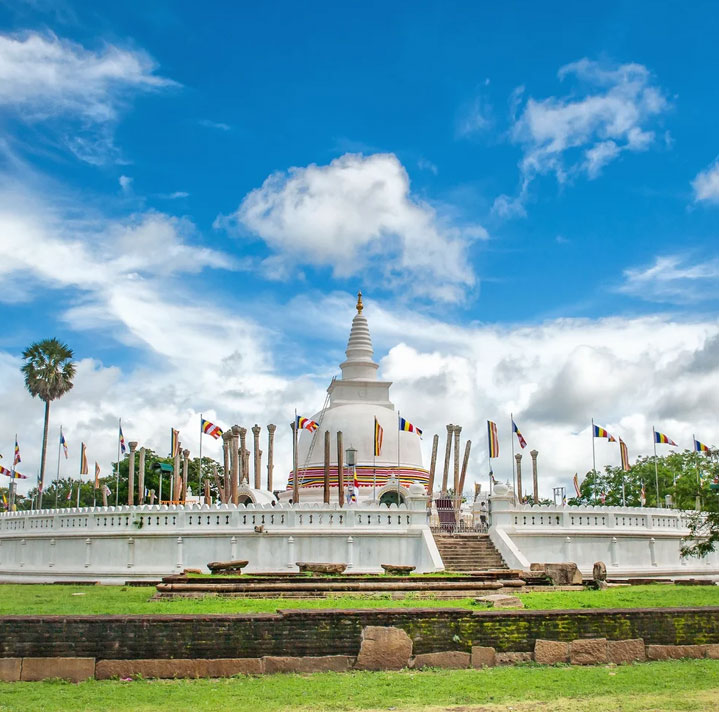
- Dimensions: Today, the monument has a diameter of 59 feet at its base. The dome itself sits on a granite-paved circular platform with a diameter of 164 feet 6 inches.
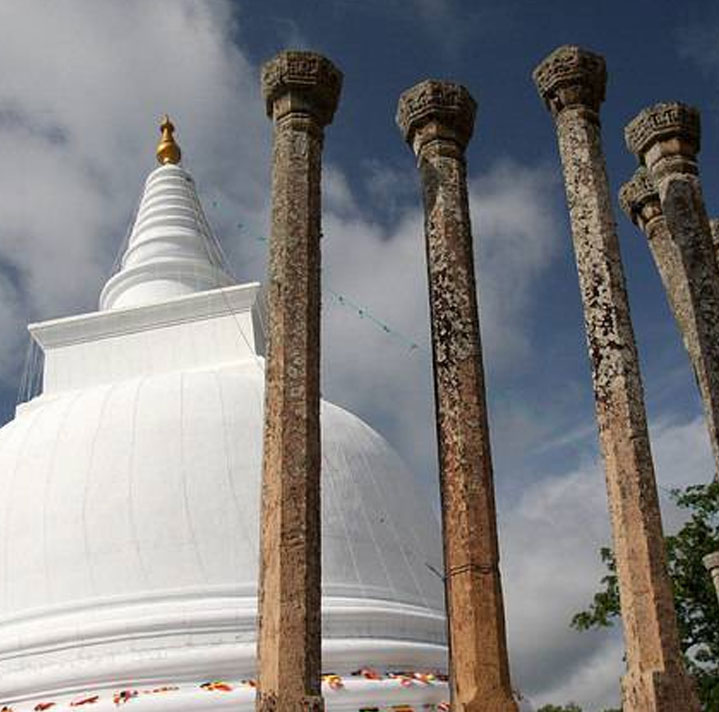
A hallmark feature is the Vatadage (circular relic house) that once enclosed the stupa. Today, visitors can see remnants of this structure in the four concentric circles of slender stone pillars with lotus-shaped capitals surrounding the dome. Of the original 176 pillars, approximately 31 to 41 still stand, varying in height as they approach the center.
Surrounding Monastery Complex
The name "Thuparamaya" itself is a combination of "thupa" (stupa) and "aramaya" (monastic complex), indicating its role as a residential facility for monks. The entire monastic site once spanned nearly 3.5 acres. Notable ruins in the immediate vicinity include:
- Image House: Located to the left of the stupa, this structure (once thought to be a Tooth Relic house) features an entrance with intricately carved guard stones and a moonstone.
- Chapter House: Situated to the south, this vast structure still retains many massive granite pillars and grand guard stones at its entrance.
- Padalanchana Cetiya: A small nearby stupa built by King Lanjatissa in the 1st century BC, believed to mark the spot where four Buddhas of this aeon left their footprints.
- Ancient Hospital: Archaeological excavations have revealed remains of a hospital dating back over 2,000 years, including medical equipment and ancient latrine systems.
Religious and Cultural Significance
As one of the Atamasthana (the eight sacred sites in Anuradhapura), Thuparamaya remains a primary pilgrimage destination in 2026. Devotees visit to perform rituals such as offering flowers, lighting oil lamps, and chanting pirith (sacred verses). The site is particularly active on Poya (full moon) days.
The Basawakkulama Wewa, the oldest reservoir in Anuradhapura built by King Pandukabhaya, lies on the northwestern side of the stupa, providing a scenic and historic backdrop to the complex. For international visitors, the site is recognized as a UNESCO World Heritage Site under the Sacred City of Anuradhapura.
Gallery
Previous Rafting Tour experiences with our guests