Udawalawe National Park
Udawalawe National Park
Udawalawe National Park is one of Sri Lanka’s most significant and popular conservation areas, serving as a vital sanctuary for the island's wildlife and a cornerstone of its eco-tourism industry. Spanning approximately 30,821 hectares (119 square miles) across the boundary of the Sabaragamuwa and Uva Provinces, it is the third most visited national park in the country, trailing only Yala and Wilpattu. Established on June 30, 1972, its primary purpose was to provide a refuge for wild animals displaced by the construction of the massive Udawalawe Reservoir on the Walawe River and to protect the reservoir's critical catchment area.
Geography and Landscape
The park’s unique geographical position at the intersection of Sri Lanka’s wet and dry zones creates a diverse ecosystem that is distinctly different from the dense jungles found elsewhere on the island. Much of the terrain consists of open plains, undulating grasslands, and thorny scrub, which offers visitors remarkably clear visibility for spotting wildlife. The landscape is dominated by the Udawalawe Reservoir, whose waters draw from the Central Highlands, including the Horton Plains and Peak Wilderness. To the north, the park is framed by the striking Kalthota Escarpment and the Diyawini Falls, while the western peak of Ulgala rises to 373 meters, providing a dramatic backdrop to the vast savannahs. A hauntingly beautiful feature of the park is the forest of dead weather-bleached trees standing within the reservoir, a visual legacy of the forest that existed before the dam was built.
The Kingdom of Elephants
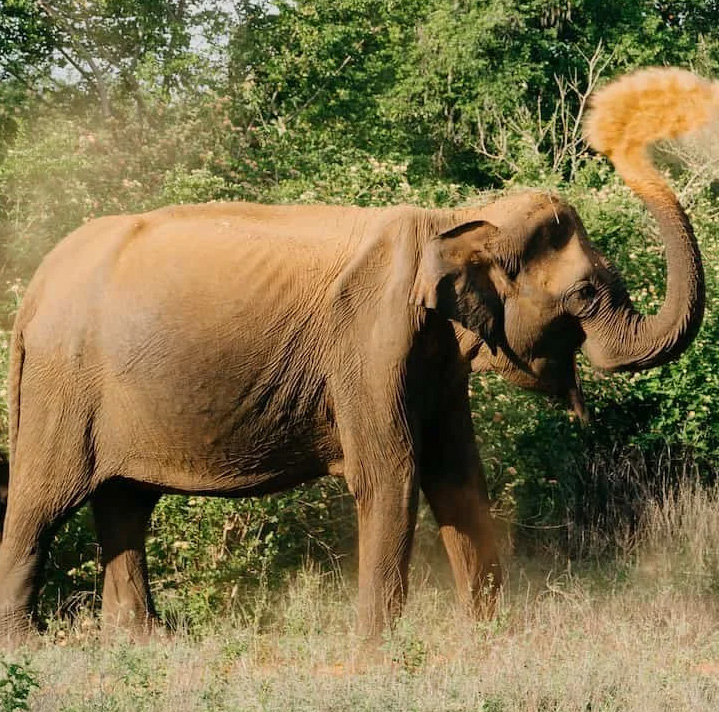
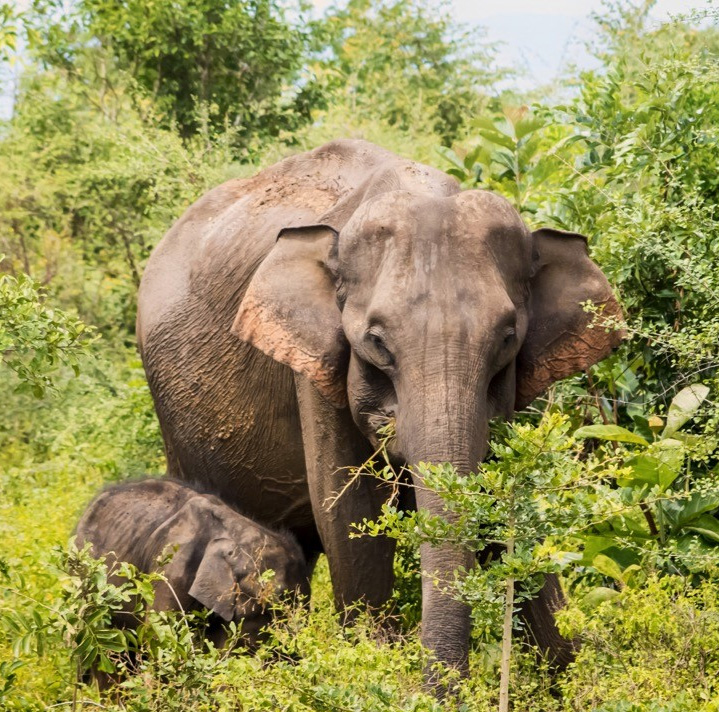
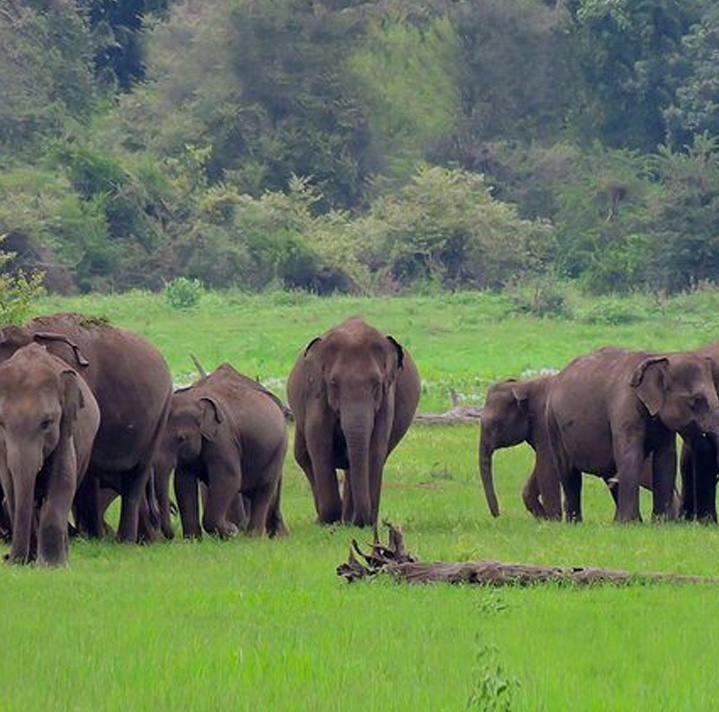
Udawalawe is world-renowned as one of the best places to observe the Sri Lankan elephant (Elephas maximus maximus) in its natural habitat. Unlike other parks where sightings can be sporadic, elephants are virtually guaranteed here year-round due to the open terrain and the constant availability of water from the reservoir. The park is home to a permanent population of approximately 400 to 700 elephants. These majestic creatures are often seen in large herds, especially during the dry season (May to September), when they congregate in the hundreds at waterholes to drink and bathe.
Adjacent to the park is the Udawalawe Elephant Transit Home (ETH), a pioneering ethical conservation project established in 1995. Supported by the Born Free Foundation, the ETH rehabilitates orphaned and injured elephant calves with the goal of eventually releasing them back into the wild within the national park. Visitors can observe feeding sessions from a distance, ensuring minimal human contact to maximize the elephants' chances of successful reintegration.
Biodiversity and Avifauna
While elephants are the main attraction, Udawalawe’s biodiversity extends to 43 species of mammals, 33 species of reptiles, and over 180 species of birds.
- Mammals: Beyond the herds of elephants, visitors may spot Water Buffalo, Sambar Deer, Spotted Deer, Wild Boar, and Golden Jackals. Elusive predators like the Sri Lankan Leopard and Sloth Bear reside in the park but are seen less frequently than in Yala. Small, rare cats like the Fishing Cat and the Rusty-spotted Cat—one of the world's smallest felines—also call the park home.
- Birds: The park is a premier destination for birdwatching, hosting resident endemics such as the Sri Lanka Junglefowl, Sri Lanka Grey Hornbill, and the Brown-capped Babbler. The reservoir attracts diverse water birds, including Spot-billed Pelicans, Cormorants, and Painted Storks, while the open plains are patrolled by raptors like the Crested Serpent Eagle and the White-bellied Sea Eagle.
- Flora: The vegetation primarily includes dry mixed evergreen forests, riverine forests, and vast grasslands. Dominant tree species include Satinwood, Halmilla, Ebony, and the massive Kumbuk trees that line the riverbanks.
Safari Experience
A safari in Udawalawe is typically conducted in an open 4x4 jeep, which can be arranged at the park entrance or through local hotels.
- Timing: The park is open from 6:00 AM to 6:00 PM. Morning safaris (starting at dawn) are favored for cooler temperatures and active birdlife, while afternoon safaris (around 3:00 PM) offer the best chance to see large elephant herds gathering at the water.
- Best Time to Visit: While open year-round, the dry season (May to September) is ideal for wildlife viewing as animals congregate near the reservoir. The migratory bird season occurs between November and March.
Gallery
Previous Rafting Tour experiences with our guests