Ussangoda National Park
Ussangoda National Park
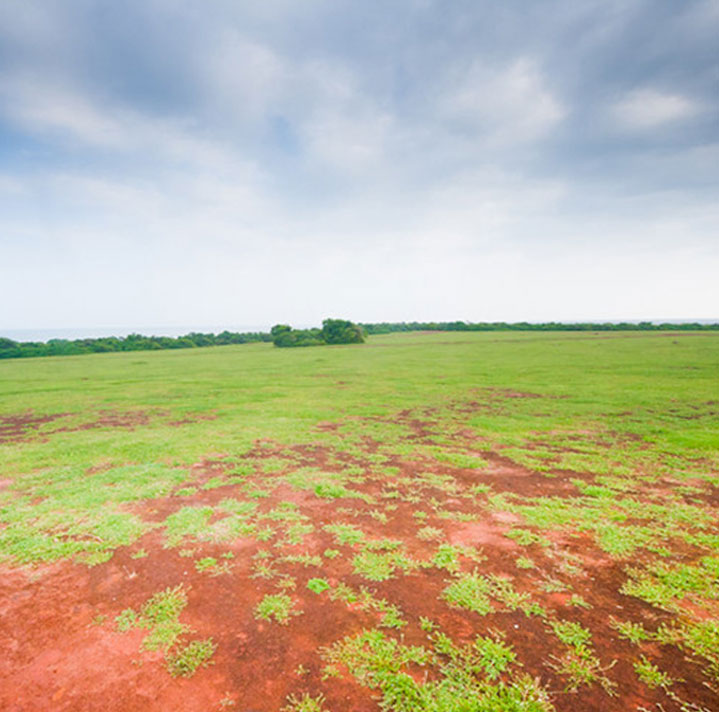
Ussangoda National Park, established in 2010 as Sri Lanka's 21st national park, is a unique coastal plateau located in the Hambantota District. Spanning approximately 3.49 square kilometers (about 349 hectares), it is one of the island's most geographically and mythologically significant sites, characterized by its striking red soil and stunted vegetation.
Geological Significance
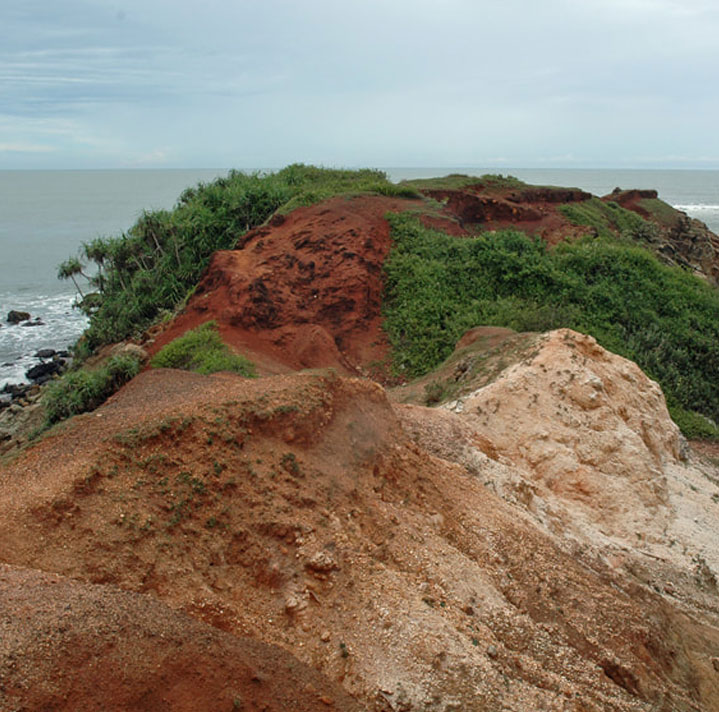
Ussangoda is renowned for its "Martian" landscape, featuring deep reddish-brown earth that contrasts sharply with the surrounding greenery and the blue Indian Ocean.
- Serpentine Soil: It is the largest of only four or five serpentine sites in Sri Lanka. The soil contains high concentrations of heavy metals (such as iron, nickel, and manganese) and has a low silica and calcium-to-magnesium ratio.
- Barrenness: The high toxicity and lack of nutrients in this soil inhibit most plant growth, leading to a landscape dominated by prostrate grasses, moss, and small hardy shrubs.
- Meteorite Theory: A popular local and scientific speculation is that the area was hit by a meteorite or asteroid thousands of years ago. Proponents of this theory point to the soil's brick-like hardness, high mineral content, and evidence of extreme heat as potential remnants of an impact.
Cultural and Mythological History
The park is a major site on the Ramayana Trail, steeped in ancient Hindu mythology:
- Ravana's Airport: Legend suggests Ussangoda was a landing strip for King Ravana’s mythical peacock chariot, the Dandu Monara (or Pushpaka Vimana).
- The Scorched Earth: Another legend attributes the red, barren landscape to Lord Hanuman. It is said that when Hanuman’s tail was set on fire by Ravana's soldiers, he used it to torch parts of the kingdom, leaving the ground permanently scorched and blackened.
- Archaeological Value: Beyond mythology, the site holds historical importance with findings of ancient burial grounds and its proximity to "Miniha Gal Kanda," where evidence of prehistoric human existence has been discovered.
Biodiversity
Unlike typical wildlife-heavy parks like Yala, Ussangoda was primarily established to protect its unique flora and geological features. However, it still hosts diverse species:
- Marine Life: The park serves as a vital breeding ground for sea turtles, including green and hawksbill turtles that come ashore to nest.
- Avifauna: Visitors can spot numerous bird species, including Indian peafowl, painted storks, white-bellied sea eagles, and greater flamingos in the nearby lagoons.
- Mammals and Reptiles: While rare, sightings can include the Sri Lankan leopard, Indian star tortoise, ruddy mongoose, golden jackal, and mugger crocodiles in aquatic areas.
Visitor Information
- Location: Situated on the Colombo-Kataragama road near the Ambalantota–Nonagama Junction. It borders the Kalametiya Wildlife Sanctuary.
- Best Time to Visit: Sunrise and sunset are recommended to avoid the intense midday sun and to enjoy the most picturesque views for photography.
- Activities: The park is ideal for quiet walks, nature photography, and bird watching. It features a trail leading to a cliff edge that overlooks the beach.
- Entry: Entrance to the park is generally free, and there is toll-free parking near the entrance.
Gallery
Previous Tour experiences with our guests