Yala National Park
Yala National Park
Yala National Park (also known as Ruhuna National Park) is Sri Lanka’s most famous and second-largest national park. Situated in the southeastern region of the island, it is a world-renowned destination for wildlife enthusiasts, primarily due to its exceptionally high density of leopards.
Geography and Ecosystems
Spanning approximately 979 square kilometers, Yala is divided into five blocks, although only two (Blocks I and II) are majorly open to the public. The park is a tapestry of diverse habitats, including:
- Monsoon Forests: Dense woodland that provides cover for large mammals.
- Marine Wetlands: Coastal lagoons and sandy beaches along the Indian Ocean.
- Grasslands & Scrub: Open plains ideal for spotting grazing animals.
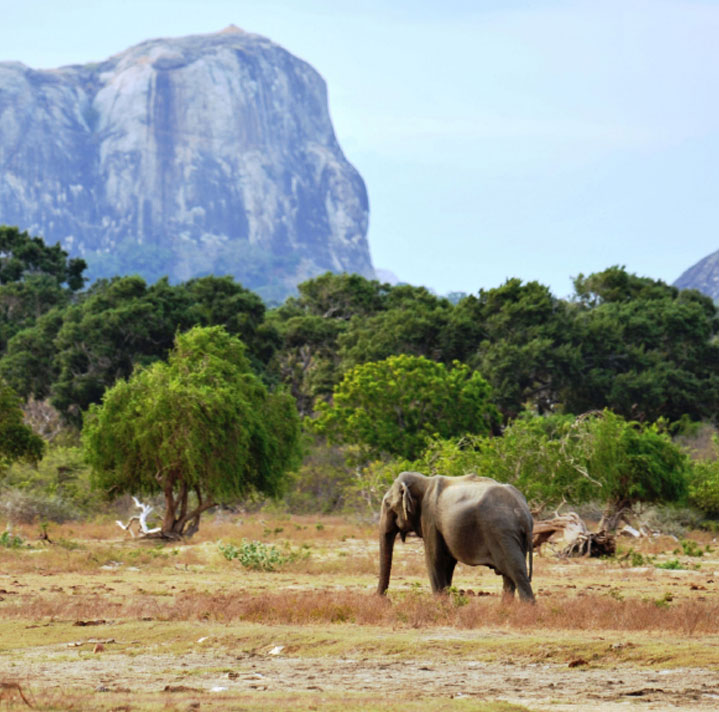
- Rock Outcrops: Giant granite boulders (inselbergs) that serve as lookout points for leopards.
The "Big Three" of Yala
While the park is home to hundreds of species, three animals are the primary focus for most visitors:
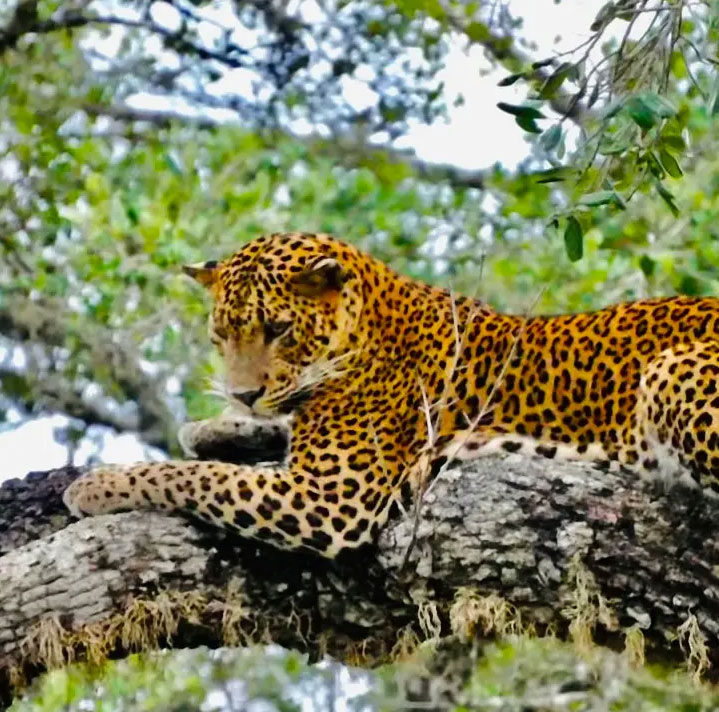
- Sri Lankan Leopard (Panthera pardus kotiya): Yala Block I is widely considered to have the highest leopard density in the world, making it the best place on earth to photograph these elusive cats.
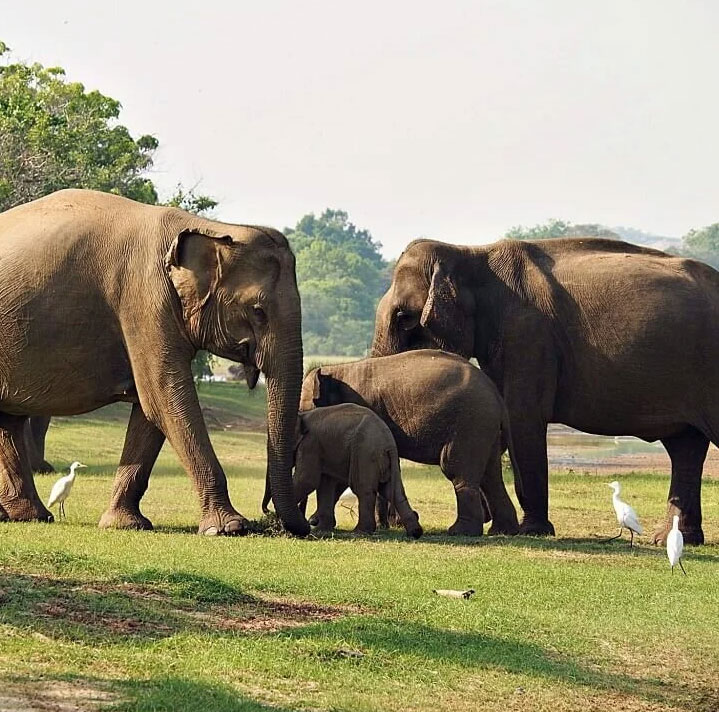
- Sri Lankan Elephant: Large herds are frequently seen gathered around the park’s many "villus" (water holes), especially during the dry season.
- Sloth Bear: Though shy and nocturnal, they are often spotted during the Palu fruit season (May to July) when they climb trees to feed.
Biodiversity
Yala is a biodiversity hotspot recognized as an Important Bird Area (IBA).
- Avifauna: It hosts 215 bird species, including 7 endemics. Highlights include the Crested Serpent Eagle, Malabar Pied Hornbill, and the Sri Lanka Junglefowl.
- Reptiles: The park is home to both Mugger and Saltwater crocodiles, as well as the Indian Star Tortoise and various cobra species.
- Marine Life: The coastline serves as a nesting ground for five species of sea turtles.
History and Heritage
Yala is not just a natural wonder; it is a site of great historical significance.
- Magul Maha Viharaya: Ancient ruins of a Buddhist monastery located within the park date back to the 2nd century BC, indicating that the area was once a thriving civilization part of the Ruhuna Kingdom.
- Tsunami Memorial: The park was tragically hit by the 2004 Indian Ocean Tsunami. A memorial stands at Patnanagala where a lodge once stood, serving as a somber reminder of the event's power.
Gallery
Previous Tour experiences with our guests